
Can red light therapy regrow gums? No — not in the way many people hope. Once gum tissue has physically receded and exposed the tooth root, red light therapy cannot simply make lost gum tissue grow back on its own. Receding gums generally do not regenerate naturally, and advanced recession often requires professional periodontal care, such as gum grafting or other root coverage procedures. Cleveland Clinic states plainly that receding gums cannot grow back, although steps can help prevent worsening.
That said, red light therapy for gum recession is not a useless topic. In dentistry, the more precise term is photobiomodulation, or PBM. Research suggests PBM and low-level laser therapy may help support wound healing, reduce inflammation, improve patient comfort after periodontal procedures, and possibly enhance some periodontal treatment outcomes when used as an adjunct — not as a standalone cure. A 2024 systematic review and meta-analysis found that photobiomodulation may be a valuable complement to basic periodontal therapy, especially with transgingival application techniques.
For wellness clinics, dental spas, recovery centers, and commercial red light therapy businesses, the key is communication. Red light therapy should not be marketed as a way to “regrow gums” or reverse periodontal disease. A more accurate position is: PBM may support gum health-related healing processes under professional dental guidance, but it does not replace diagnosis, scaling and root planing, periodontal maintenance, or surgical gum recession treatment.
Red light therapy cannot regrow receded gums naturally. However, photobiomodulation may help reduce gum inflammation, support wound healing, and improve comfort when used alongside professional periodontal care. For true gum recession, proven treatment options include improved oral hygiene, scaling and root planing for gum disease, desensitizing treatments, periodontal maintenance, and gum graft surgery when root coverage is needed.
Gum recession happens when the gum margin moves away from its normal position around the tooth, exposing more of the tooth or root surface. This can make teeth look longer, increase sensitivity, create cosmetic concerns, and make exposed root surfaces more vulnerable to decay.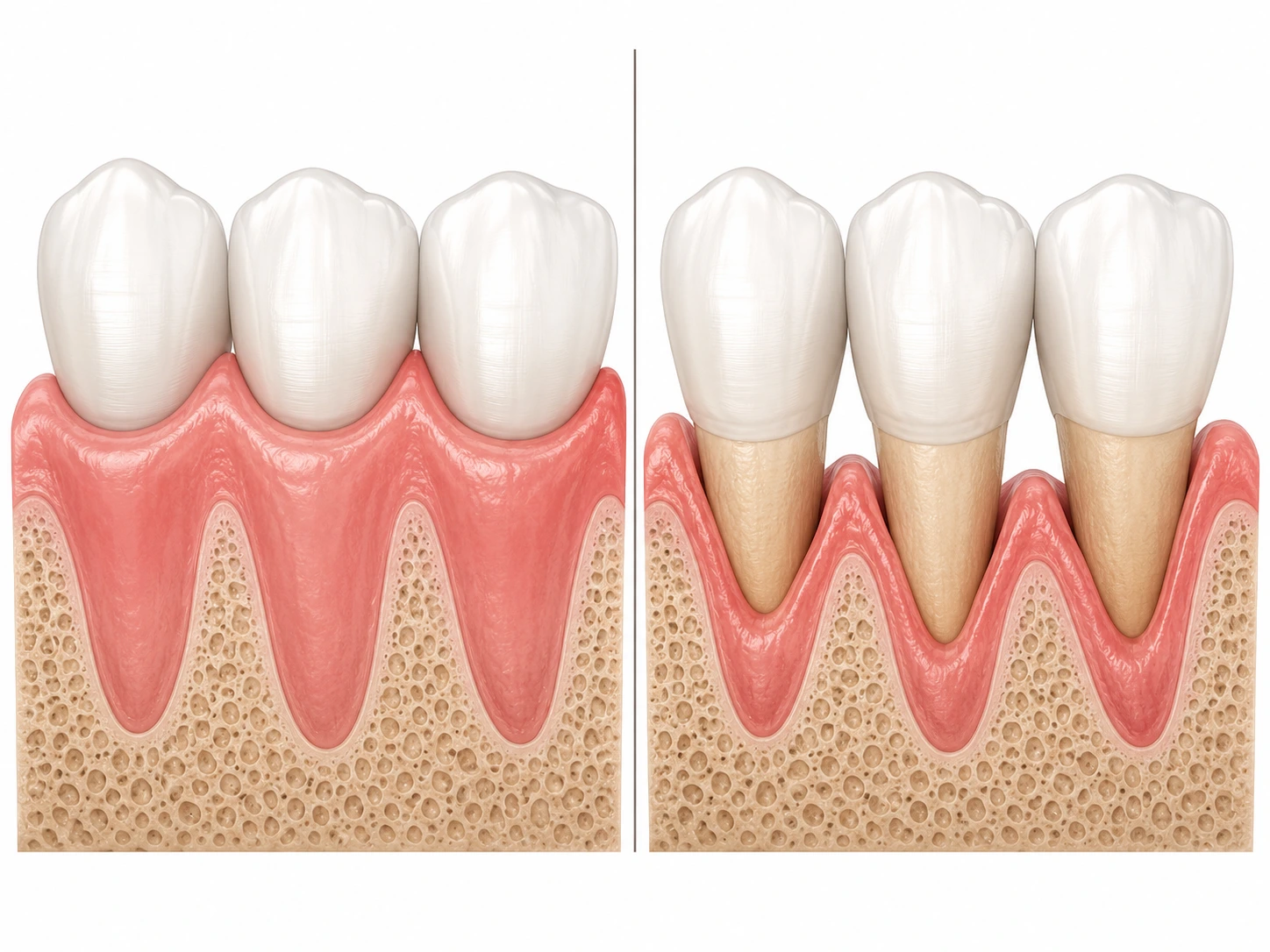
Common causes include:
| Cause | How It Contributes |
|---|---|
| Periodontal disease | Inflammation and infection can damage gum and bone support. |
| Aggressive brushing | Excessive force can wear gum tissue over time. |
| Thin gum biotype | Some people naturally have thinner, more recession-prone tissue. |
| Poor oral hygiene | Plaque and tartar increase inflammation risk. |
| Tobacco use | Smoking is associated with worse periodontal outcomes. |
| Orthodontic movement | Tooth position can influence gum margin stability. |
| Teeth grinding or trauma | Mechanical stress may contribute in some cases. |
Periodontitis is more than “irritated gums.” The ADA describes periodontitis as a condition involving inflammation plus attachment or radiographic bone loss, and treatment aims to remove plaque, biofilm, and calculus while creating a maintainable oral environment.
Can gums grow back naturally? In general, no. Receded gum tissue does not simply regenerate back to its original position. Mild gum inflammation, such as gingivitis, may improve with professional cleaning and better daily care, but established gum recession is different from temporary swelling or redness. NIDCR notes that gingivitis is a mild form of gum disease that can usually be reversed with brushing, flossing, and regular dental cleaning, while periodontitis involves gums pulling away from teeth and forming infected pockets.
This distinction matters:
| Condition | Can It Improve Naturally? | What Usually Helps |
|---|---|---|
| Gingivitis | Often reversible with care | Cleaning, brushing, flossing, plaque control |
| Gum inflammation | Often manageable | Dental evaluation, hygiene, anti-inflammatory care |
| Gum recession | Usually not naturally reversible | Prevention, monitoring, grafting or root coverage if needed |
| Periodontitis | Manageable, not “self-cured” | Scaling and root planing, maintenance, sometimes surgery |
So when people ask, “does red light therapy help receding gums?” the answer is nuanced. It may help with inflammation or healing support, but it should not be presented as a natural gum-regrowth method.
Red light therapy for gums usually refers to applying red or near-infrared light to oral tissues. In clinical literature, this is often called:
Photobiomodulation uses specific wavelengths and energy parameters to influence biological tissue responses. In dental settings, PBM is commonly studied for pain, inflammation, tissue healing, and post-surgical recovery. However, treatment parameters matter: wavelength, dose, power density, exposure time, application technique, number of sessions, and target tissue all influence outcomes.
This is why commercial operators should be careful. A full-body red light therapy bed is not the same as a dental PBM protocol applied by a trained clinician to gum tissue. Magique Power offers commercial red light therapy beds, panels, and OEM/ODM device options for wellness and recovery applications, including red/NIR wavelengths such as 633 nm, 660 nm, 810 nm, 850 nm, and 940 nm on selected products. But oral PBM use requires dental-specific protocols, regulatory review, and professional oversight.
Red light therapy for gum inflammation is one of the more reasonable areas of interest. Periodontal disease involves bacterial biofilm and an inflammatory immune response. PBM is being studied because it may help modulate inflammation and support tissue repair.
A 2024 review of PBM used alongside basic periodontal therapy included 22 studies and found that studies suggest PBM may be a useful complement in periodontitis treatment. The review also found that treatment frequency ranged from 1 to 9 sessions and follow-up ranged from 5 days to 12 months, showing that protocols vary widely.
What this means: PBM may help as an adjunct, but inflammation caused by plaque, tartar, or infection still requires professional dental care.
PBM is often studied in wound healing. A systematic review and meta-analysis on secondary-intention gingival wound healing concluded that PBM can be used to improve gingival wound healing, while also noting knowledge gaps around optimal laser characteristics.
This is relevant after procedures such as:
For dental clinics and oral-care professionals, this is a more evidence-aligned message than “red light regrows gums.”
A randomized clinical trial on laterally closed tunnel technique with adjunctive photobiomodulation found that PBM did not show a better outcome for recession depth, but it appeared to support faster wound healing and better patient comfort.
This is a critical finding for balanced content. PBM may improve the patient experience without necessarily changing the final root coverage result.
The ADA guideline for nonsurgical chronic periodontitis treatment states that scaling and root planing showed moderate benefit and was favored as the initial nonsurgical treatment. It also notes uncertainty around the clinical benefit of some laser adjuncts in nonsurgical periodontal care.
This means PBM should be positioned as adjunctive. It is not a replacement for:
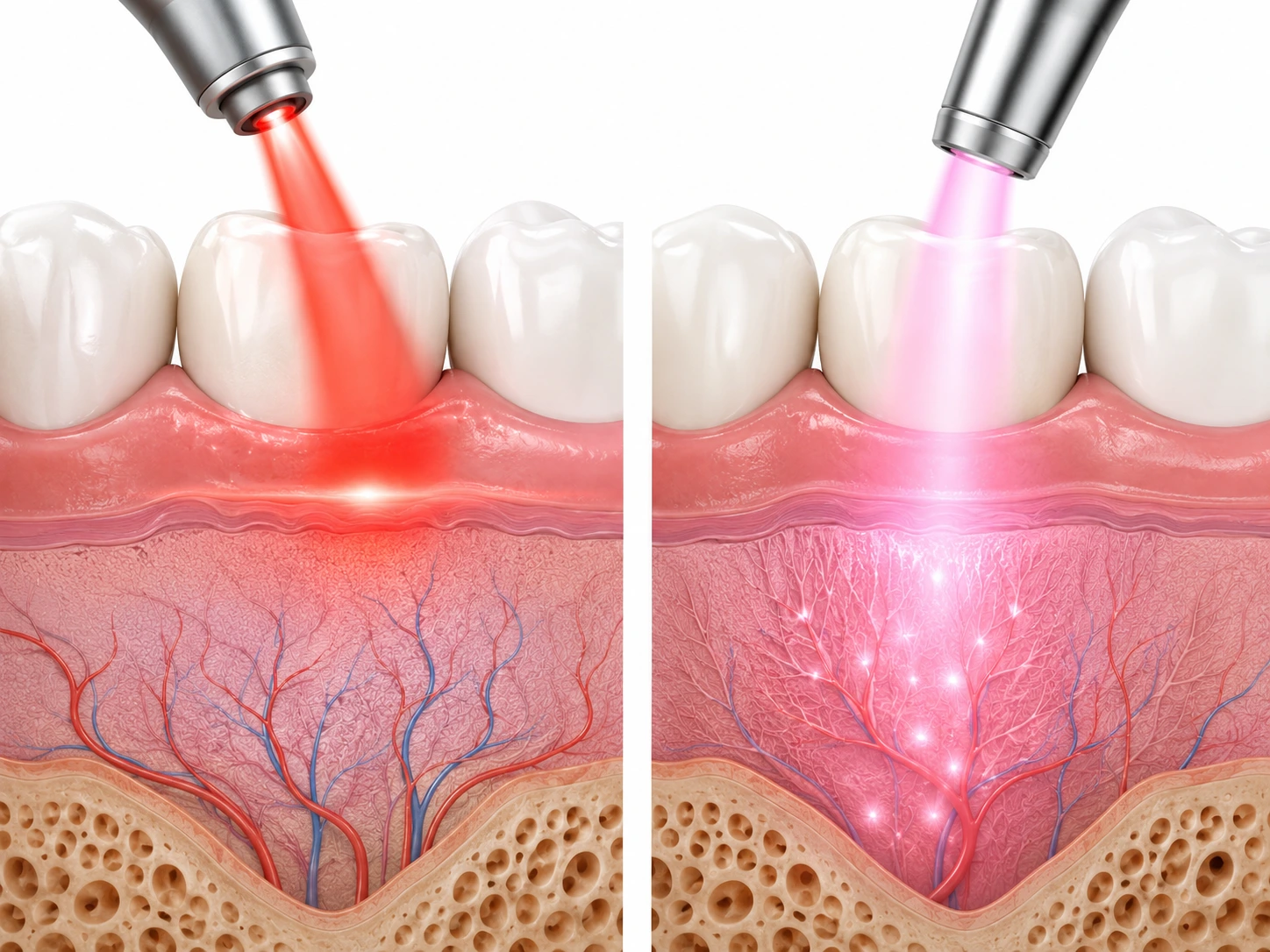
The most important SEO answer: red light therapy cannot regrow gums that have receded. It may support cellular processes involved in healing, but lost gum architecture usually requires professional intervention.
Periodontal disease is strongly driven by bacterial biofilm and calculus. Light therapy does not replace mechanical cleaning. ADA periodontal treatment guidance emphasizes removal of plaque, biofilm, and calculus as a core treatment goal.
If recession is advanced, a periodontist may recommend gum graft surgery. The American Academy of Periodontology explains that gum graft surgery covers exposed roots, may reduce sensitivity, and helps prevent additional recession and bone loss.
Periodontitis is a chronic inflammatory disease that requires professional management. Even after successful therapy, maintenance is important; ADA content notes that patients with periodontitis require lifelong supportive care to prevent recurrence.
| Treatment Option | Best For | Can It Regrow Gums? |
|---|---|---|
| Better brushing technique | Early prevention | No, but may prevent worsening |
| Desensitizing toothpaste or fluoride | Tooth sensitivity | No |
| Professional cleaning | Gingivitis and plaque control | No, but may reverse gingivitis |
| Scaling and root planing | Periodontitis | No, but treats infection/inflammation |
| Periodontal maintenance | Long-term disease control | No, but helps stability |
| Gum graft surgery | Exposed roots and advanced recession | Can restore coverage |
| Regenerative procedures | Bone/tissue loss in selected cases | May regenerate supporting tissue |
| PBM / low-level laser therapy | Adjunctive healing and inflammation support | No standalone gum regrowth |
The AAP describes regenerative procedures as options when bone supporting teeth has been destroyed, using membranes, bone grafts, or tissue-stimulating proteins to encourage regeneration of bone and tissue.
For spas, dental wellness clinics, recovery centers, and red light therapy resellers, this topic has strong search demand — but also high compliance risk.
Avoid claims like:
Use safer, more accurate language:
Dental clinics, med spas with dental partners, and wellness operators may explore PBM as an adjunct service. Before investing, they should evaluate:
Dental PBM usually requires precise application to oral tissues. Full-body red light beds are designed for broader wellness and recovery use, while dental PBM often uses intraoral or targeted devices.
Professional buyers should request wavelength data, irradiance measurements, safety documentation, and manufacturing quality details. Magique Power’s red light therapy product range includes commercial beds, panels, customizable wavelengths, and OEM/ODM support.
Dental and medical claims are regulated differently by market. A product used for general wellness may not be cleared for periodontal treatment. Clinics should verify local requirements before advertising PBM for gum disease or gum recession.
PBM outcomes depend on correct parameters and patient selection. Dental professionals should design protocols, screen contraindications, and document use.
No. Red light therapy cannot regrow receded gums by itself. It may support inflammation control or wound healing, but lost gum tissue usually requires professional periodontal treatment.
It may help indirectly by supporting healing and reducing inflammation, especially after periodontal procedures. However, it does not restore the gumline on its own.
Photobiomodulation is being studied for gum inflammation and periodontal healing. Some evidence suggests it may be useful as an adjunct to periodontal therapy, but it should not replace dental treatment.
Receding gums generally do not grow back naturally. Gingivitis may be reversible, but gum recession and periodontitis need professional assessment.
The best treatment depends on severity and cause. Options include improved brushing technique, periodontal cleaning, scaling and root planing, maintenance visits, desensitizing care, and gum graft surgery for exposed roots.
They are related but not always identical. In dentistry, low-level laser therapy and photobiomodulation refer to controlled clinical light applications with specific parameters. Consumer or commercial red light devices may not be suitable for dental PBM unless designed and regulated for that use.
No. Gum disease requires professional dental diagnosis and treatment. Red light therapy may be an adjunct, but it cannot remove plaque, tartar, or infected periodontal pockets.
Can red light therapy regrow gums? No — red light therapy should not be marketed as a gum-regrowth treatment. Receded gums generally do not grow back naturally, and true root coverage often requires professional periodontal treatment such as gum grafting.
But the story does not end there. Red light therapy for gum recession may have a supportive role when discussed accurately. Photobiomodulation may help reduce inflammation, support gingival wound healing, and improve comfort after some periodontal procedures. The most responsible message is that PBM is an adjunctive wellness or clinical support tool, not a replacement for dental care.
For commercial buyers, dental wellness clinics, and red light therapy businesses, Magique Power can support equipment planning, wavelength customization, and professional red/NIR device sourcing — while encouraging responsible claims, regulatory review, and collaboration with licensed dental professionals.
